
[AID | Space] 아르테미스 II 발사: 54년 만의 유인 달 임무, NASA 심우주 체계 검증[AID | Space] Artemis II Launch: First Crewed Lunar Mission in 54 Years Validates NASA's Deep Space Architecture
NASA Artemis II의 Orion·SLS 유인 심우주 비행 검증 목적, SpaceX vs Blue Origin 착륙선 경쟁, 다국적 공급망 구조, 그리고 Artemis 프로그램의 전략적 의미를 분석합니다.Artemis II is a systems verification flight, not a landing mission. Analyzes Orion/SLS deep-space testing, the SpaceX vs Blue Origin lander competition, multinational supply chain structure, and what this baseline means for investors, governments, and the industry.
![[AID | Space] 아르테미스 II 발사: 54년 만의 유인 달 임무, NASA 심우주 체계 검증](/_next/image?url=%2Fresources%2Fartemis-ii-mission-profile.png&w=3840&q=75&dpl=dpl_H4XdTMzecf1MezyQLGudCWW2dx8p)
Artemis II: 달에 가는 것이 아니라, 갈 수 있는지를 검증하는 비행
Artemis II는 달 착륙 임무가 아니다. 향후 Artemis 프로그램 일정의 현실성을 검증하는 테스트 비행이다.
| 발사일 | 유인 달 궤도 비행 | 유인 달 착륙 목표 |
|---|---|---|
| 2026.04.01 (EDT 18:35) | Apollo 17 이후 54년 만 | 2028 Artemis IV |
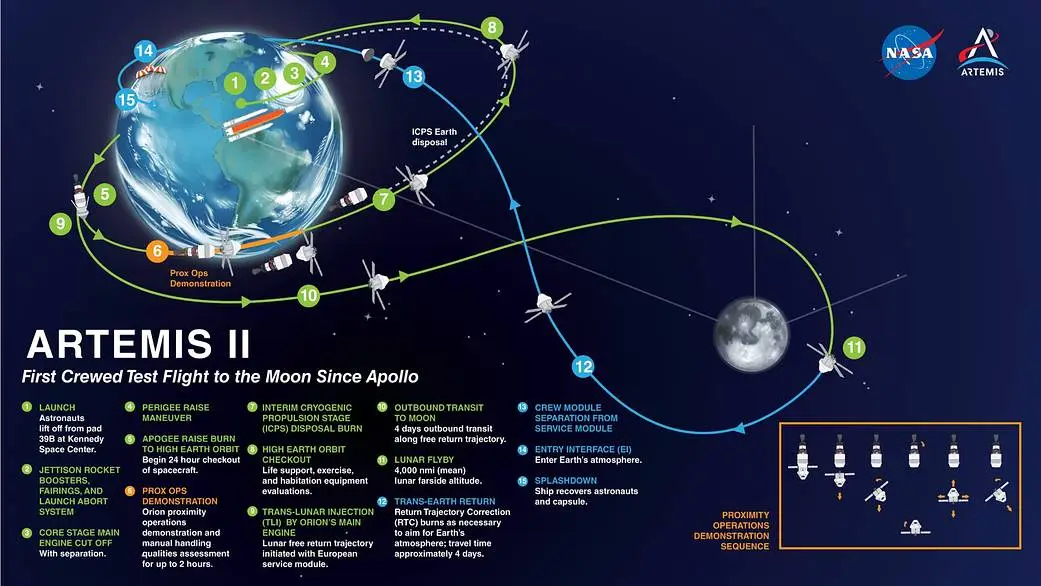
이번 임무의 주요 목적: 탐사가 아닌 검증
NASA는 4월 1일 Kennedy Space Center에서 Artemis II를 발사했다. Orion 우주선과 SLS 로켓의 유인 심우주 수송 능력을 실제 환경에서 테스트한다.
심우주 수송 능력(Deep space transportation capability): 단순히 멀리 가는 능력이 아니라, 지구 저궤도(LEO)를 넘어 인간과 장비를 안정적으로 보내고, 운영하고, 귀환시키는 전체 시스템 능력을 의미
핵심 검증 항목:
- 생명유지 시스템 (장기 유인 비행 가능성)
- 통신 (심우주 연결 안정성)
- 수동 조종 (비상 상황 대응)
- 도킹 (착륙선 연계 핵심)
- 방사선 대응 성능 (인간 임무 지속 가능성)
승무원은 Reid Wiseman, Victor Glover, Christina Koch(NASA)와 Jeremy Hansen(캐나다 우주국). Koch는 달 궤도 비행 최초 여성, Glover는 달 임무 최초 흑인 우주인, Hansen은 달을 향해 비행한 최초의 비미국인이다.
프로그램 현황: 일정과 목표는 이미 한 차례 변경되었습니다
NASA의 수정된 일정에 따르면 Artemis III(2027) 임무는 기존 달 착륙에서 상업용 착륙선 도킹 테스트로 변경되었다. 실제 유인 착륙은 Artemis IV(2028)로 이연됐다. 즉, 지금 프로그램은 "검증 단계"라고 볼 수 있다.
SpaceX와 Blue Origin은 달 착륙선 개발 경쟁을 진행 중이며, 최종 선택은 Artemis IV 이전 개발 진척도에 따라 결정될 예정이다.
발사 전 지연과 궤도 진입 직후 통신 손실 등 일부 이상이 발생했다. 프로그램이 여전히 높은 유지·검증 부담을 안고 있음을 보여준다.
산업 구조: 공급망이 고정되는 단계
Artemis II는 단일 국가 프로젝트가 아니라 다국적 공급망 기반 시스템이다.
L3Harris (핵심 엔진 및 항공전자) RS-25·RL10 엔진, Orion 메인 엔진, 40개 항공전자 시스템을 포함한 100개 이상의 구성 요소 공급.
Renesas Electronics (방사선 대응 반도체) 방사선 내성 반도체를 통해 전력 관리와 온보드 연산 기능 담당.
캐나다·ESA·호주 (추적 인프라) 추적 인프라 참여. Artemis가 연합 기반 체계로 운영되고 있음을 확인.
현 시점에서 검증된 공급업체가 후속 임무(Artemis III~V)에서도 우선적으로 유지될 가능성이 높다. 신규 진입자에게 구조적 장벽으로 작용하는 동시에, 특정 부품 계열에 대한 단일 의존 리스크도 내포한다.
해석 분기: 같은 이벤트, 다른 프레이밍
- NASA Administrator Jared Isaacman: 54년 만에 "우주인을 달로 보내는 사업"에 복귀했다고 규정.
- 프랑스 대통령 Macron: ESA의 유럽 서비스 모듈이 상징이 아닌 구조적 기여라고 강조.
- 일부 학계: Artemis를 탐사가 아닌 장기적 우주 식민화의 시작으로 해석.
지금 시점에서 볼 것들
🟢 WATCH: 생명유지·통신·수동 조종·도킹 결과 이번 비행 데이터가 Artemis III·IV의 준비 수준을 직접 결정할 것이다.
🔵 SIGNAL: 다국적 연합 인프라 확인 캐나다, ESA, 호주의 추적 인프라 참여는 Artemis가 연합 기반 체계로 운영되고 있음을 확인시킨다.
🔴 RISK: 일정 추가 조정 가능성 일정은 이미 한 차례 수정됐으며, Artemis II 데이터가 추가 조정 여부를 결정할 것이다.
Artemis II의 의미는 성공 여부보다 기준점을 설정하는 데 있다.
공급망 참여 기업에게는 진입 구조가 고정되는 초기 단계이며, 투자자에게는 착륙선 경쟁 구도의 분기점이 되고, 정부에는 다국적 협력 기반 우주 인프라의 필요성을 확인시키는 계기로 작용한다.
Connectionary AID
AI · 우주 · 반도체 등 Tech 관련 이슈를 소스 추적 가능한 구조화 인텔리전스로 제공합니다.
Sources: NASA · Reuters · The Guardian · ESA · 2026.04
Artemis II: First Crewed Lunar Flight in 54 Years. What It Actually Means.
Artemis II is not a lunar landing mission. It is a test flight to validate the feasibility of NASA's future Artemis program timeline, and a structural checkpoint for the supply chain, investors, and governments watching it.
| Launch Date | Gap Since Apollo 17 | Crewed Landing Target |
|---|---|---|
| 2026.04.01 (EDT 18:35) | 54 years | 2028 Artemis IV |
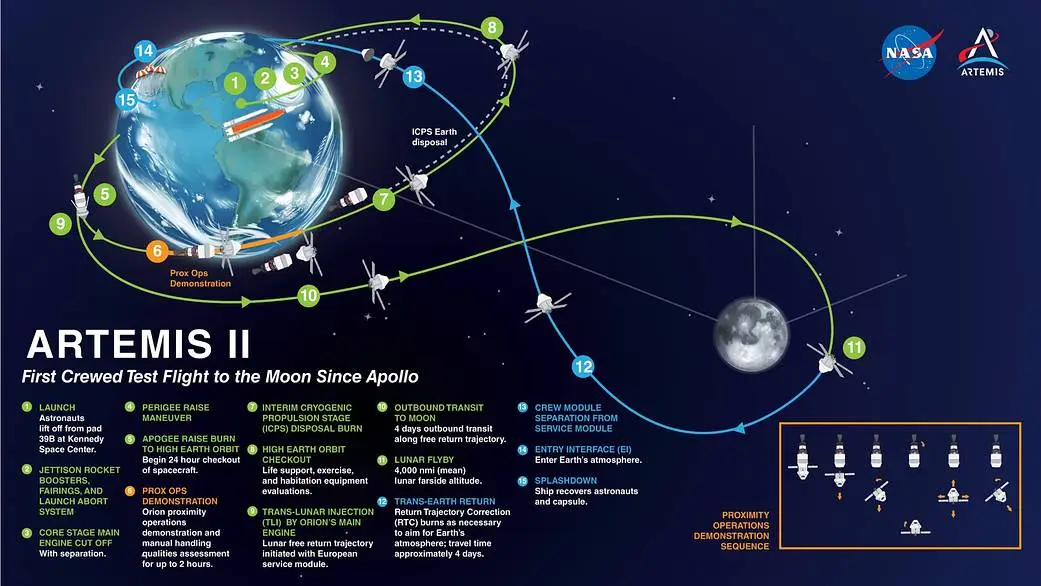
What this mission does: verification, not exploration
NASA confirmed liftoff at 18:35–36 EDT from Kennedy Space Center. The mission's purpose is systems verification, not exploration. Orion and SLS are being tested across life support, communications, manual control, docking, and radiation shielding under actual deep-space conditions.
Key verification items:
- Life support systems (long-duration crewed flight viability)
- Communications (deep-space link stability)
- Manual control (emergency response capability)
- Docking (lander integration critical path)
- Radiation shielding performance (human mission sustainability)
The crew (Reid Wiseman, Victor Glover, and Christina Koch from NASA, alongside Jeremy Hansen from the Canadian Space Agency) sets multiple firsts. Koch is the first woman on a lunar trajectory, Glover the first Black astronaut on a lunar mission, and Hansen the first non-American to fly toward the Moon.
Program status: the schedule has already shifted once
Under NASA's revised schedule, Artemis III (2027) has shifted from a lunar landing to a commercial lander docking test. The first crewed lunar landing has moved to Artemis IV (2028). SpaceX and Blue Origin are in active competition for the lunar lander contract, with NASA's final selection to be determined by development progress ahead of Artemis IV.
Pre-launch delays and in-flight anomalies (including a communications loss shortly after orbital insertion) indicate the program continues to carry a significant maintenance and verification burden.
Industrial structure: supply chain locking in
Artemis II operates not as a single-nation project but as a system built on a multinational supply chain.
L3Harris: Supplied over 100 components, including RS-25 and RL10 engines, Orion's main engine, and 40 avionics systems.
Renesas Electronics: Radiation-hardened semiconductors handling power management and onboard computing across Orion and SLS subsystems.
Canada · ESA · Australia: Tracking infrastructure participation confirms Artemis operates as a coalition-based architecture. Partner contributions are structural, not symbolic.
Vendors already validated at this stage are likely to carry forward across Artemis III–V, creating structural barriers for new entrants while introducing single-source dependency risk within critical component categories.
Interpretation split: same event, different framing
- NASA Administrator Jared Isaacman: Declared a return to "the business of sending astronauts to the Moon" after a 54-year gap.
- French President Macron: Emphasized that ESA's European Service Module represents a structural (not symbolic) European contribution.
- Some in academia: Interpret Artemis not as exploration but as the opening phase of long-term space colonization.
What to watch now
🟢 WATCH: Life support, comms, manual control, docking results This flight's data will directly determine readiness for Artemis III and IV.
🔵 SIGNAL: Coalition-based architecture confirmed Canada, ESA, and Australia's tracking infrastructure participation confirms Artemis as a multinational system, not a US-only program.
🔴 RISK: Further schedule adjustments possible The schedule has already been revised once. Artemis II data will determine whether further adjustments follow.
Artemis II matters less for whether it succeeds and more for the baseline it establishes.
For supply chain participants, this is the early stage where entry structures are becoming fixed. For investors, it marks the inflection point in the lunar lander competition. For governments, it confirms the necessity of multinational cooperation as the foundation for deep-space infrastructure.
Connectionary AID
Structured intelligence on AI, Space, Semiconductors & Tech; every signal traced to its source.
Sources: NASA · Reuters · The Guardian · ESA · 2026.04