
글로벌 사이버보안 정책 뉴스레터 Vol.1 (2025년 10월)
사이버·양자·우주기술의 국가안보 통합, 일본 능동적 사이버 방어법, 복원력 격상, NATO·EU 정보전 대응, EU Chat Control 논쟁 등 2025년 10월 글로벌 사이버보안 정책 동향을 분석합니다.
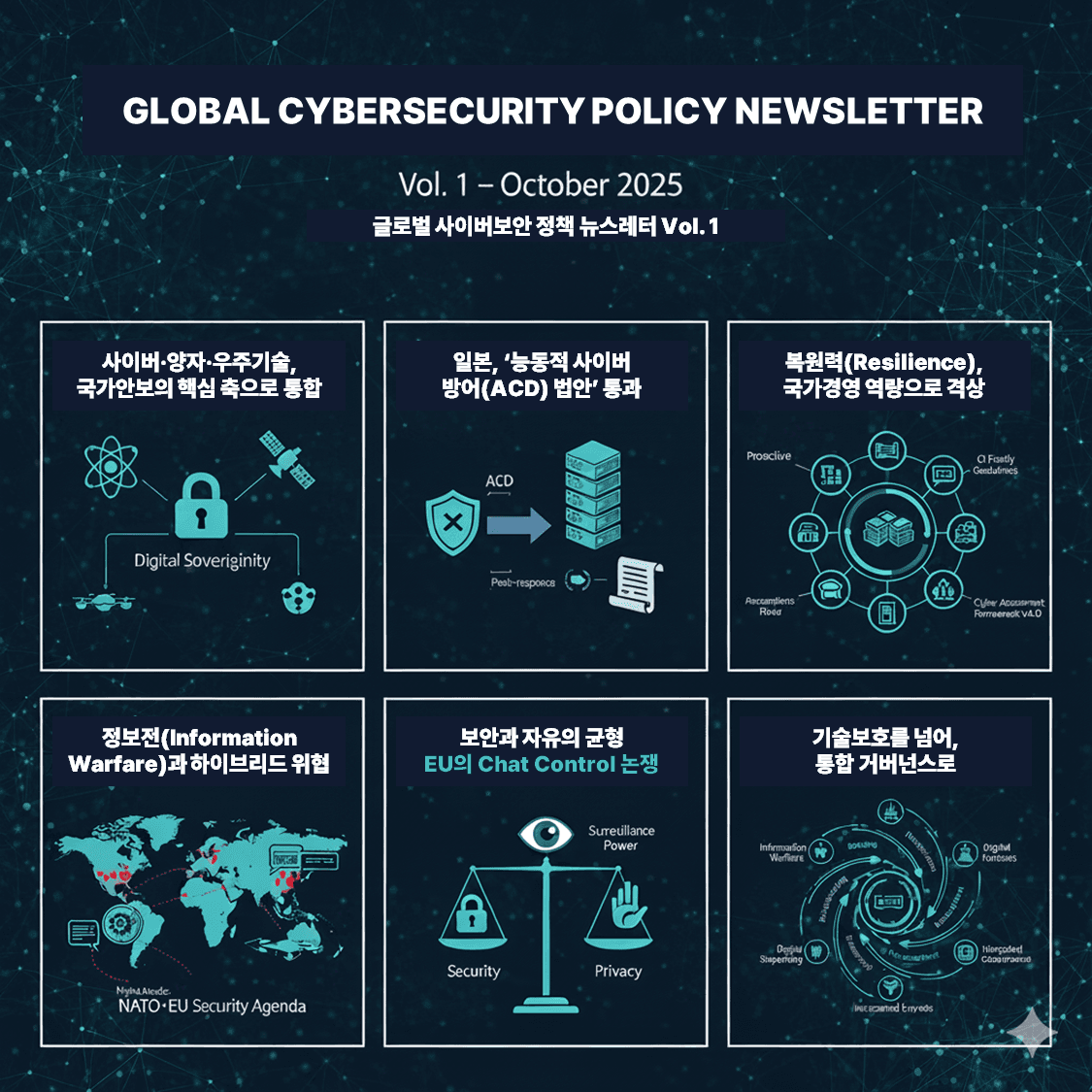
Global Cybersecurity Policy Newsletter Vol.1 – October 2025
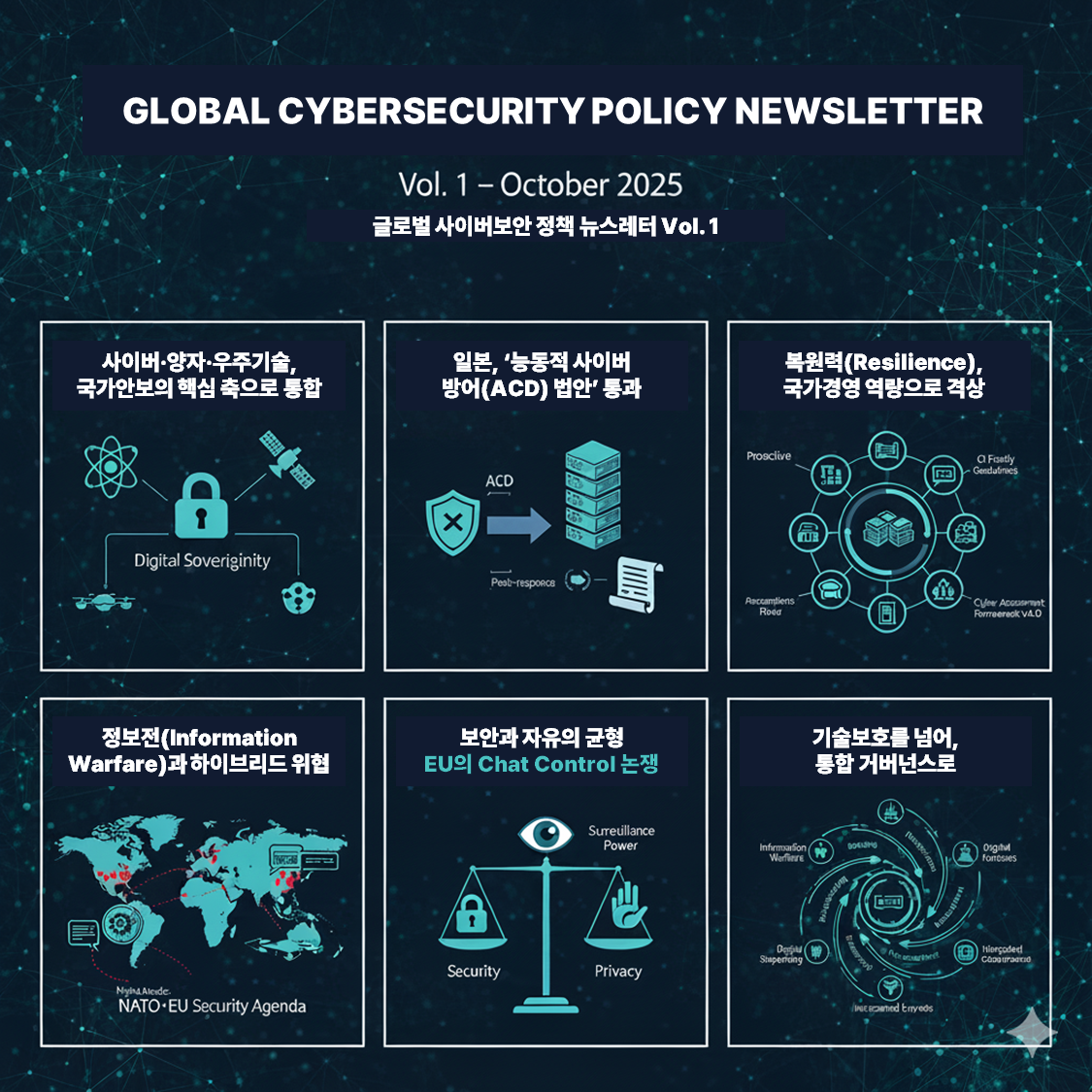
(Generated by Gemini & Connectionary Inc.)
사이버·양자·우주기술, 국가안보의 핵심 축으로 통합
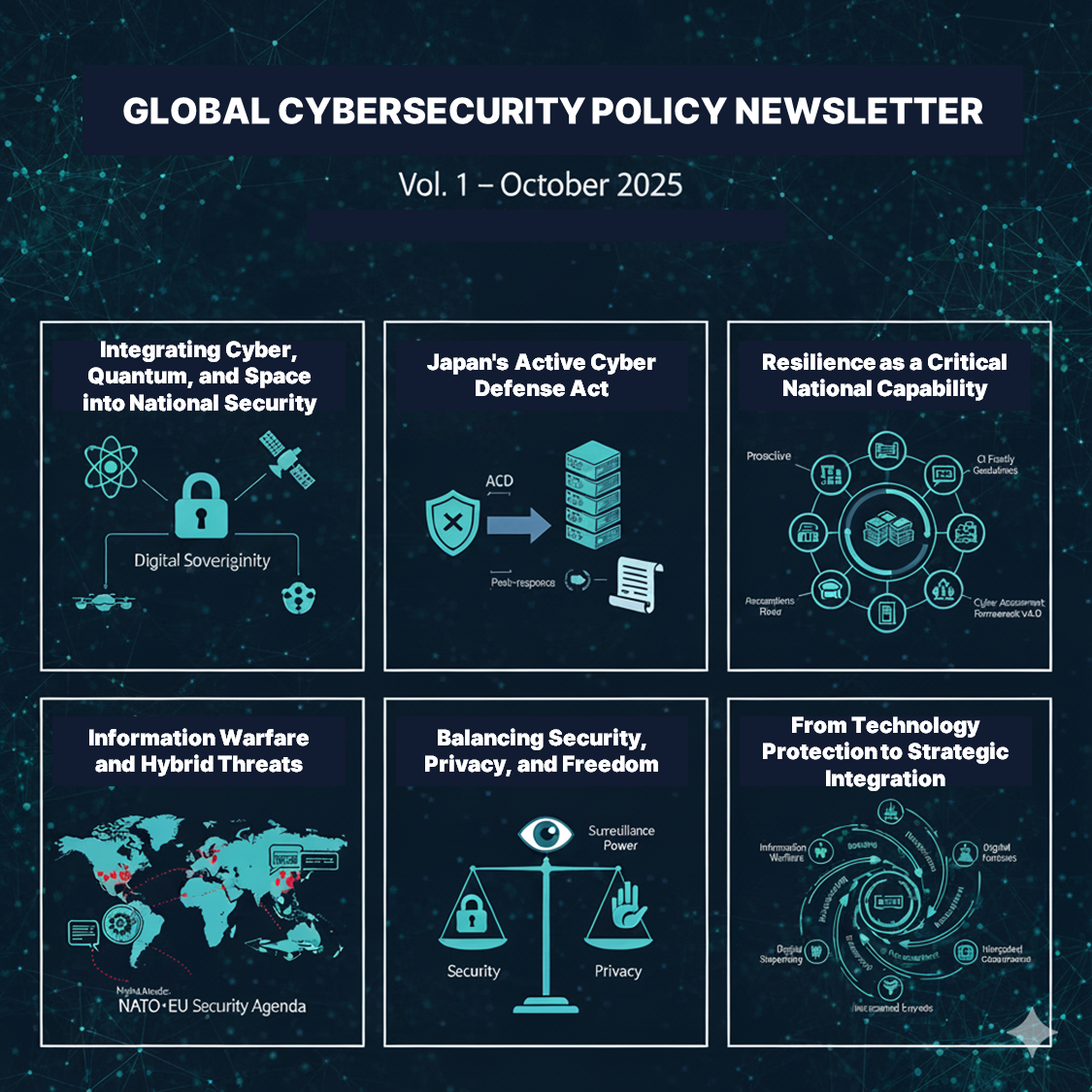
주요국은 사이버보안(Cybersecurity), 양자기술(Quantum Technology), 우주방위(Space Security) 등 신기술 영역을 국가안보의 중심축으로 통합하며 디지털 주권(Digital Sovereignty) 경쟁을 본격화하고 있습니다.
미국은 양자 대응(Quantum Readiness) 시기를 앞당겼으며, 독일은 **우주 안보 예산(Space Security Budget)**을 대규모로 확대했습니다.
일본, '능동적 사이버 방어(ACD) 법안' 통과
일본은 능동적 사이버 방어(Active Cyber Defense, ACD) 법안을 통과시켜 공격 이전 단계에서의 탐지·차단을 합법화했습니다. 이를 통해 사후 대응 중심의 보안 체계에서 사전 예방형(Proactive) 방어 체계로의 전환을 제도화했습니다.
복원력(Resilience), 국가경영 역량으로 격상
중요기반시설(Critical Infrastructure)에 대한 공격이 지속됨에 따라, 각 국가는 복원력(Resilience)을 단순한 기술적 개념이 아닌 국가경영의 핵심 역량(Critical National Capability)으로 격상하고 있습니다.
주요 사례로는 호주의 CI Fortify 지침과 영국의 Cyber Assessment Framework v4.0이 있으며, 두 국가는 탐지-대응-복구의 전주기적 복원력 강화를 제도화했습니다.
정보전(Information Warfare)과 하이브리드 위협
러시아는 유럽 전역을 대상으로 한 하이브리드 공격(Hybrid Attacks)(사이버 침입, 심리전, 드론 정찰, 내러티브 조작)을 지속 확대하고 있습니다.
이에 대응해 NATO와 EU는 정보전 및 심리전 대응을 군사·외교와 동등한 수준의 안보 의제로 격상했습니다.
이는 곧 '정보의 조작과 통제'가 국가 위협이 되는 시대의 도래를 의미하며, 사이버전이 군사영역을 넘어 사회·문화 체계로 확장되고 있음을 보여줍니다.
보안과 자유의 균형: EU의 Chat Control 논쟁
EU의 CSAR(Chat Control) 법안은 암호화 통신 감시 권한 확대를 추진하고 있으나, 독일은 "헌법국가에서 무작위 감시는 금지되어야 한다"고 반대하며, 보안(Security), 프라이버시(Privacy), 감시 권력(Surveillance Power)의 균형 재조정이 주요 정책 과제로 부상했습니다.
기술보호를 넘어, 통합 거버넌스로
오늘날 사이버안보(Cybersecurity)는 단순한 기술보호를 넘어, 정보전·디지털 주권·인권보호가 교차하는 복합 전략영역으로 재편되고 있습니다. 복원력에 관한 각국의 실행력 있는 방안과, 보안과 자유 간 이견을 해소하기 위한 정책적 흐름을 주의깊게 지켜볼 필요가 있습니다.
About Connectionary AID
본 뉴스레터는 증거기반 인텔리전스 플랫폼(Evidence-Based Intelligence Platform) Connectionary AID의 데이터 분석을 바탕으로 작성되었습니다. AID는 주요국의 사이버보안, 디지털 주권, 신기술 정책 동향을 체계적으로 추적·분석하고 있습니다.
Global Cybersecurity and Digital Sovereignty Trends (Oct, 2025): From Quantum Readiness to Proactive Defense
Major nations integrate cybersecurity, quantum technology, and space systems into national security. Covers Japan's Active Cyber Defense Act, resilience frameworks in Australia and the UK, NATO-EU information warfare response, and the EU Chat Control debate.
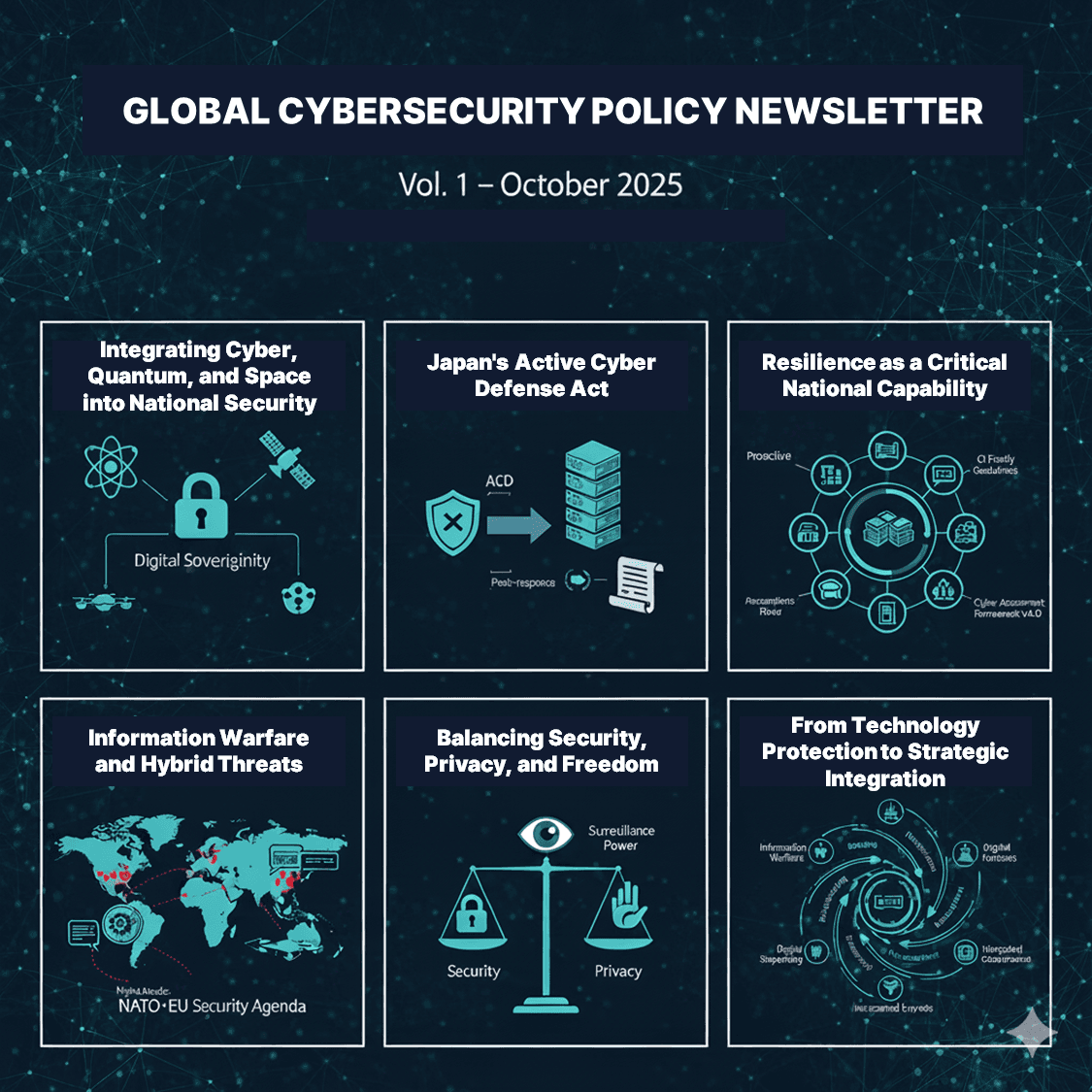
Integrating Cyber, Quantum, and Space into National Security
Major nations are integrating cybersecurity, quantum technology, and space systems into the core of their national security strategies, signaling the start of a new era of digital sovereignty competition.
The United States has accelerated its quantum-readiness timeline, while Germany has launched large-scale space security programs.
Japan's Active Cyber Defense Act
Japan passed the Active Cyber Defense (ACD) Act, legalizing pre-emptive detection and blocking of cyberattacks.
This marks a shift from reactive security to a proactive defense architecture, institutionalizing prevention-first cybersecurity governance.
Resilience as a Critical National Capability
As attacks on critical infrastructure rise, nations are elevating resilience from a technical measure to a core national capability.
Notable examples include Australia's CI Fortify Framework and the UK's Cyber Assessment Framework v4.0, both promoting end-to-end resilience, from detection to recovery.
Information Warfare and Hybrid Threats
Russia continues hybrid operations across Europe: cyber intrusions, drone reconnaissance, and disinformation campaigns.
In response, NATO and the EU now recognize information warfare and cognitive defense as strategic pillars alongside military and diplomatic power.
This signals a new era in which information control itself is a national-security threat.
Balancing Security, Privacy, and Freedom
The EU's Chat Control (CSAR) proposal aims to expand surveillance of encrypted communications, but Germany opposes it, asserting that "randomized surveillance must be prohibited in a constitutional state."
This reflects the growing tension among cybersecurity, privacy, and democratic values.
From Technology Protection to Strategic Integration
Cybersecurity is now a strategic domain where technology, human rights, and digital sovereignty intersect.
Future policies will focus on:
- Integrating technology, industry, and diplomacy
- Balancing innovation and civil liberties
- Strengthening resilience and freedom as twin pillars of governance
About this insight
This article is based on data and analysis from Connectionary AID, our evidence-based intelligence platform that tracks cybersecurity, digital sovereignty, and emerging technology policy trends across major economies.